Imagine you walk into a bank to deposit your money. It goes into a safe. The safe locks. Your money is protected.
But there's a detail most people never think about: the manager holds the key. Not you.
Your money is "safe", but only on his terms. If he wakes up one day and decides he wants to investigate your account, he can freeze it, restrict it, place a hold on it. You didn't do anything wrong. It doesn't matter. He has the key, so he has the final say.
Now picture a different bank. Same safe, same lock. Except this time, they hand you the key, not a copy, the actual key. You can walk in any day, at any hour, and open that safe yourself. No one needs to approve it. No one can hold your own money hostage, because the key was never theirs to control.
That second version is decentralization.
This isn't really a post about banks. It's about a much bigger question: who holds the key to your money, and what that actually means for how safe it really is.
The two lockers
In crypto, that key is your private key.
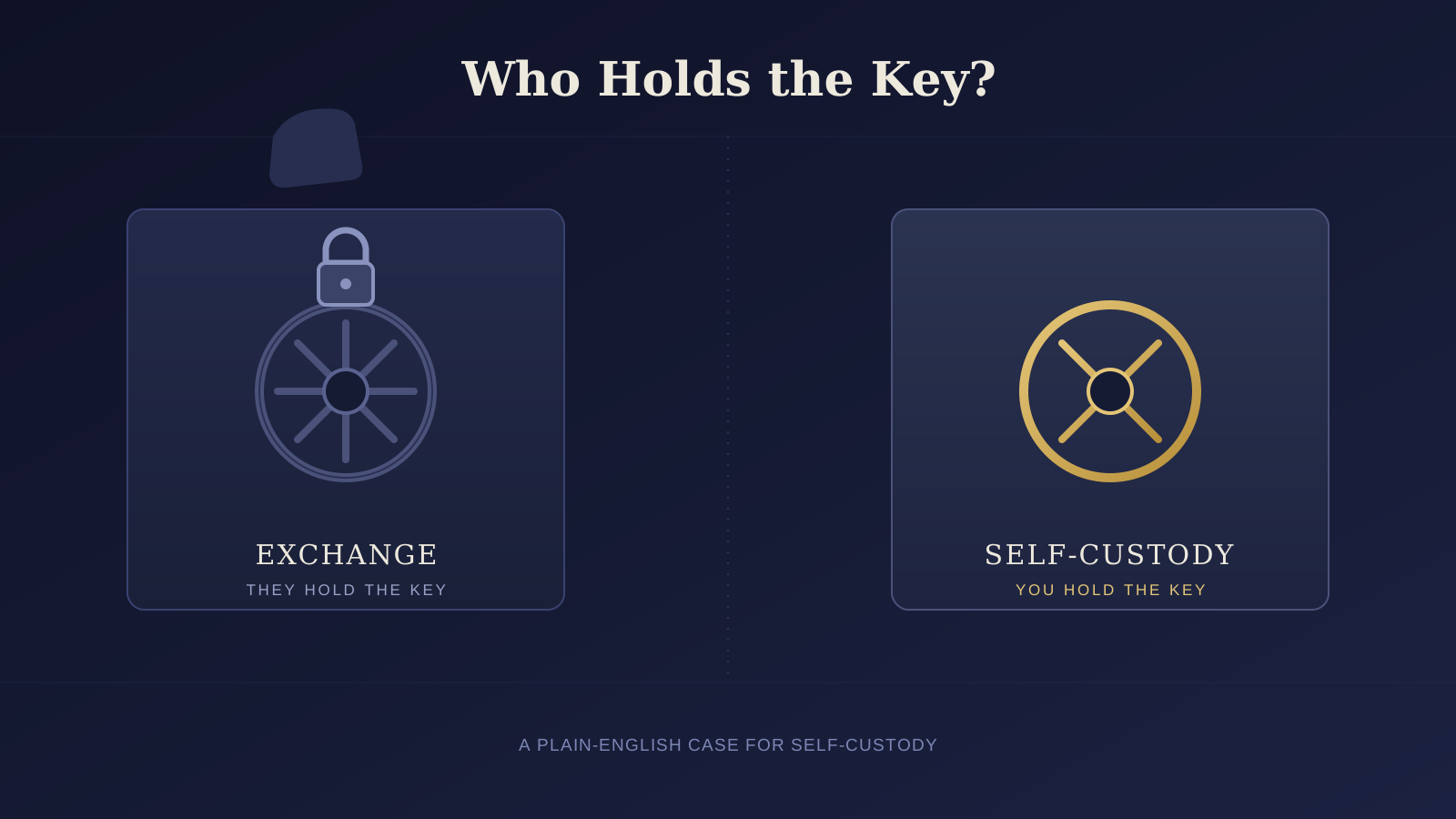
- Locker #1: the centralized exchange. Your funds are safe, until someone else decides otherwise.
- Locker #2: the self-custody wallet. Your funds are yours, on your terms, at all times.
The uncomfortable truth is that locker #2 is harder to use. It asks more of you: safeguarding a seed phrase, understanding what you're signing, taking on responsibility that a bank teller used to absorb for you. And that's exactly the problem worth solving. Making self-custody as simple and confidence-inspiring as handing your money to a teller, that's the real work of building in this space.
A story that made it real
One story I came across recently illustrates the difference between centralized and decentralized finance better than any thought experiment could.
A crypto user chose to keep his assets on a centralized exchange instead of moving them into a self-custodial wallet. When Europe's MiCA regulation came fully into effect, that exchange announced it was ceasing operations, stating it did not have the required authorization. Users suddenly found themselves navigating a wind-down process, with withdrawals subject to manual review and uncertainty.
Whether every user ultimately recovered their assets isn't really the point.
The lesson is this: when someone else controls your private keys, you're also exposed to their regulatory challenges, operational decisions, liquidity issues, and business risks. That's the tradeoff of centralized custody. It was never really "your locker", it was theirs, and you were a guest in it.
The tradeoff, honestly stated
Self-custody isn't always the easiest option. It requires education and responsibility. There's no support line to call if you lose your key, no manager to appeal to. That's a real cost, and it's worth naming plainly rather than glossing over.
But it also means your ability to access your assets doesn't depend on whether an exchange receives a license, changes its policies, or pauses operations one Tuesday morning. It doesn't depend on anyone's permission at all.
The real work ahead
As builders in Web3, our responsibility goes beyond creating secure technology. Secure technology that only experts can use safely isn't finished, it's half-built.
We need to build products that make self-custody simple enough for everyday people to use confidently: clearer key management, better recovery options, interfaces that explain risk instead of hiding it. Because decentralization isn't just about technology. It's about ownership, resilience, and freedom, and those only matter if ordinary people can actually hold the key.
Who holds the key to your money? It's worth asking before you need the answer.
Joseph Samuel
Co-founder @ Cosine Wallet - bringing the world closer to blockchain